Cracking the Casino Code: What Thai Probability Wisdom Reveals About Why Americans Keep Losing
Let's be honest for a second. Most American bettors don't lose because they're unlucky. They lose because they're working with an incomplete map. They understand odds in a surface-level way — yeah, the house has an edge, sure, blackjack beats slots — but they've never really interrogated why the math works the way it does, or whether there's a smarter lens through which to read it.
That's where things get interesting. Traditional Thai approaches to probability and risk weren't developed inside a casino boardroom. They grew out of centuries of practical decision-making in markets, in temples, in community gambling games that predated the modern betting industry by generations. And the philosophical underpinnings of that tradition offer American players something genuinely useful: a different way of seeing the numbers that are quietly draining their bankrolls.
The Western Casino Math You Think You Understand
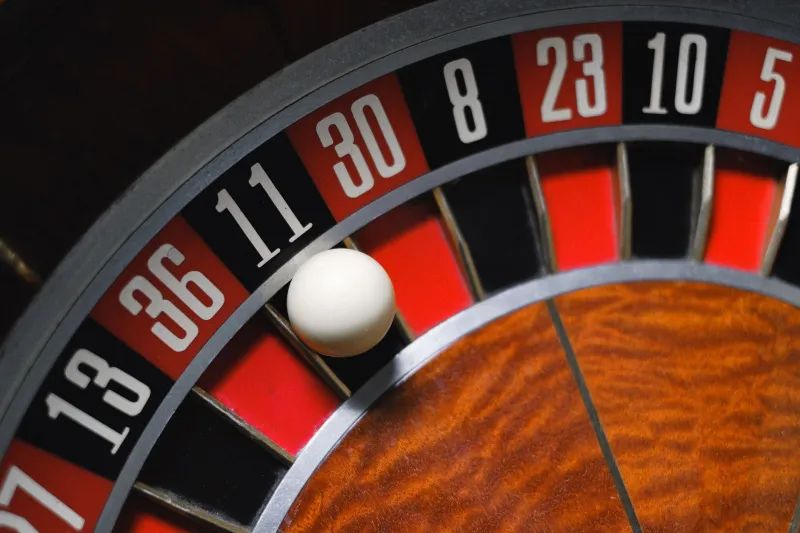
Here's the standard American take on house edge: the casino has a built-in percentage advantage on every game, and over time, that advantage grinds you down. Roulette has a house edge of around 5.26% on an American wheel. Slots can run anywhere from 2% to 15% depending on the machine. Blackjack, played with perfect basic strategy, drops that edge to below 0.5%.
Most players have heard some version of this. What they don't fully internalize is what it means in practice. The house edge isn't a prediction about any single session — it's a long-run statistical reality. You can absolutely win tonight. The math doesn't care about tonight. It cares about the ten thousand sessions across all the players at that table over the next year.
Western casino mathematics is fundamentally built around expected value — a cold, linear calculation that treats every bet as an isolated event feeding into an aggregate outcome. It's a powerful model. It's also, according to Thai probabilistic thinking, an incomplete one.
How Thai Tradition Reads Risk Differently
Traditional Thai mathematical philosophy — particularly as it intersects with gambling culture — approaches probability not as a fixed pipeline of outcomes, but as a dynamic relationship between the bettor, the moment, and the conditions surrounding the wager. This isn't mysticism dressed up as math. It's a recognition that context shapes decision-making in ways that pure expected-value calculations ignore.
Consider how Thai gamblers have historically approached games like Hi-Lo (Sic Bo) or traditional card games. Rather than asking "what is the house edge on this bet," the framework pushes toward a layered set of questions: What is my actual risk tolerance right now? What is the volatility profile of this specific wager versus a lower-variance alternative? How does the size of this bet relate to my total resources in a way that affects my ability to stay in the game long enough for variance to work in my favor?
This is closer to what modern poker theorists call "risk of ruin" analysis — but Thai tradition was applying a version of it intuitively long before Western gambling mathematics formalized the concept. The key insight is that expected value alone doesn't tell you whether a bet is right for you. It tells you what happens on average. That's not the same thing.
The Volatility Trap American Bettors Keep Falling Into
Here's a concrete example of where this plays out. American sports bettors love parlays. The appeal is obvious — link three or four bets together and turn a $20 wager into a $200 payout. The expected value on a parlay is almost always terrible. Sportsbooks juice the odds at every leg, compounding the house edge with each addition. Most experienced bettors know this.
And yet parlays remain wildly popular. Why? Because Western betting culture is obsessed with the upside number and underweights the probability-adjusted reality of getting there. Thai probabilistic thinking would flag this immediately as a volatility mismatch — you're accepting enormous variance for a payout that doesn't adequately compensate for the compounded risk. The bet feels exciting. The math says it's a trap.
Conversely, Thai frameworks tend to favor what you might call "probability-dense" wagers — bets where the outcome distribution is tighter, the house edge is lower, and the bettor can sustain longer play without catastrophic variance wiping out their session. This is why games like baccarat have historically been so popular across Southeast Asian gambling culture. It's not just tradition. It's a mathematically defensible preference for manageable risk profiles.
Reading the Edge, Not Just the Odds
One of the most practically useful ideas from Thai gambling mathematics is the distinction between stated odds and effective edge. The stated odds on a bet tell you what the payout is. The effective edge accounts for everything else — the commission structure, the variance over your planned session length, the way bet sizing interacts with your bankroll.
American bettors typically only look at the first number. Thai-influenced thinking demands you calculate the second.
At UFABET2233, this kind of layered thinking is baked into how we approach the games we offer. Understanding that a 1.5% house edge in baccarat operates very differently depending on whether you're flat-betting or chasing losses isn't just academic — it directly affects whether you walk away with money in your pocket.
Take the time to understand not just what the edge is on a given bet, but how that edge interacts with your session goals, your bankroll size, and your risk tolerance. That's the full picture.
Practical Takeaways for American Players
So what does all of this actually mean when you're sitting down to bet? A few things worth carrying with you:
Stop treating every bet as isolated. Your session is a series of connected decisions, not a string of independent coin flips. How you bet in the first hour affects your options in the third hour. Thai probability thinking treats the session as a whole unit of risk.
Match bet volatility to your bankroll. High-variance bets — big parlays, long-shot prop bets, high-multiplier slots — aren't inherently bad. But they're bad when your bankroll can't absorb the swings. Size your risk to your resources.
Know the effective edge, not just the stated odds. Before you place a bet, know the actual house edge on that game variant, not just the headline number. A 5.26% edge on American roulette is meaningfully worse than 2.7% on a European wheel. These things add up.
Respect variance as a real force. You can do everything right and still lose in the short term. Thai gambling wisdom has always acknowledged this — luck and math coexist. Respecting variance means not making desperate decisions after a bad run.
The Bottom Line
The house always has an edge. That's not going to change. But understanding how that edge works — and applying a more holistic, context-aware framework for evaluating risk — is the difference between a bettor who bleeds out slowly and one who plays smart, lasts longer, and actually enjoys the process.
Thailand's gambling tradition didn't survive centuries by ignoring mathematics. It survived by developing a richer relationship with it. American bettors have a lot to learn from that approach — and at UFABET2233, we think that education is part of what makes the whole experience better.