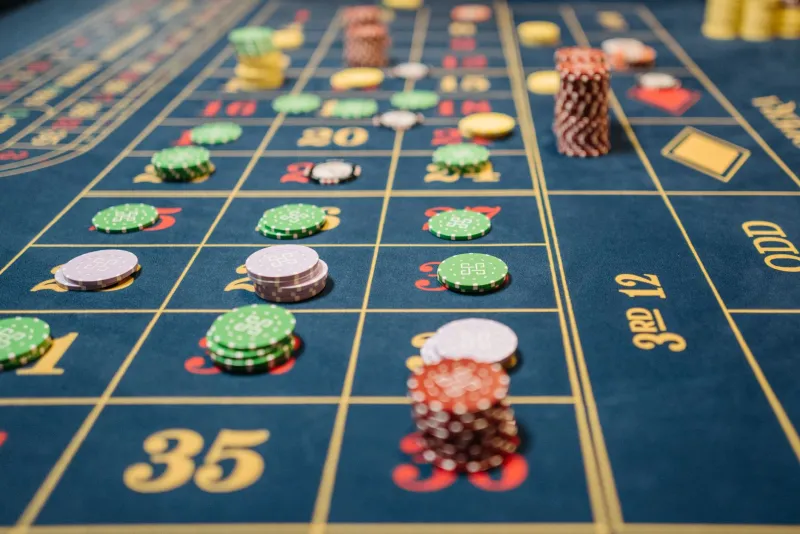
The Death of a Thousand Small Bets: How Scattered Wagering Quietly Destroys American Bankrolls

Ask most American sports bettors about their worst gambling experience and they'll describe a single catastrophic session — the parlay that nearly hit, the blowout loss on a sure thing. But that's rarely where the real damage happens. The more common story, the one that doesn't make for great drama, is the slow bleed: $15 here, $22 there, a quick $10 prop bet during halftime, another $30 on a late-night game you half-watched from the couch. By Sunday night, you're down $200 and you can't quite explain how.
This is the pattern we see constantly at UFABET2233, and it has a name: death by a thousand small bets.
The American Betting Habit: Constant, Emotional, Unfocused
American betting culture is deeply tied to sports consumption. We watch a lot of games. We follow a lot of leagues. And with mobile betting now legal and accessible in most states, the friction between "I have a feeling about this" and "bet placed" has essentially disappeared. That convenience is exciting — and financially dangerous.
The average recreational bettor in the U.S. places somewhere between 15 and 30 wagers per week during active sports seasons. The majority of these are small-dollar plays made quickly, often during games, frequently based on emotion or momentum rather than pre-game analysis. A team goes up by 10 in the second quarter and suddenly you're live-betting a moneyline you hadn't considered five minutes ago. Your favorite player makes a big play and you throw $20 on a same-game parlay almost reflexively.
Individually, none of these bets feel significant. Collectively, they represent a massive volume of unanalyzed risk.
The Thai Model: Fewer Bets, Higher Conviction
The contrast with disciplined Thai betting culture is striking. The approach common among serious Thai bettors emphasizes selectivity above almost everything else. Rather than spreading action across every available game or market, the focus lands on a small number of carefully chosen plays — often two to five per week — where the bettor has done genuine research and identified real value.
Bet sizing follows a similar philosophy. Rather than scattering flat small bets across the board, Thai-influenced bankroll frameworks typically use a tiered system tied to confidence level and perceived edge. A high-conviction play gets a proportionally larger allocation. A marginal play either gets a minimal stake or gets passed entirely.
This isn't just cultural preference. It's mathematically sound. When you concentrate your action on your best opportunities, you give your analytical edge — whatever it is — the chance to actually show up in your results. When you dilute that edge across 25 weak plays, you're essentially betting against yourself.
Case Study: The Scatter Bettor vs. The Selective Bettor
Let's run a simple comparison. Take two bettors, each starting a football season with a $1,000 bankroll.
Bettor A (American scatter style) places 20 bets per week, averaging $25 each. They win at a 48% clip — slightly below the break-even rate needed to beat standard vig. Over a 17-week season, they've placed 340 bets totaling $8,500 in action. At -2% ROI, they've lost $170 — not catastrophic, but their bankroll has eroded and the psychological toll of hundreds of small losses has been significant.
Bettor B (selective style) places 4 bets per week, averaging $60 each but varying based on confidence. They win at the same 48% rate. Over the same 17 weeks, they've placed 68 bets totaling $4,080 in action. At -2% ROI, they've lost $82 — less than half the dollar loss, with far less emotional wear.
Now imagine Bettor B actually has a slight edge — say 52% win rate from genuine research. Their total return flips to a modest profit. Bettor A at 52% still barely breaks even after vig eats into their volume. The math rewards focus.
Why Americans Keep Scattering Their Action
A few forces drive the scatter-bet habit beyond just convenience. First, there's boredom. Watching a game you haven't bet on feels less engaging, so bettors create artificial stakes everywhere. Second, there's the illusion of diversification — the mistaken belief that more bets means more chances to win. In investing, diversification reduces risk. In betting, it usually just multiplies your exposure to negative expected value.
Third — and this is the big one — small bets feel low-stakes even when they aren't. A $15 bet doesn't feel like a decision worth analyzing carefully. But if you're making that decision 20 times a week, you've made $300 worth of decisions with essentially zero analysis. That's not low-stakes. That's just slow-motion recklessness.
Restructuring Your Betting Habits: A Practical Framework
You don't need to overhaul your entire approach overnight. Start with these adjustments:
Set a weekly bet limit — and make it low. Cap yourself at five bets per week to start. This forces you to actually choose. When you can only bet five times, you stop betting on games you're lukewarm about.
Require a reason for every bet. Before placing any wager, write down — even in your phone's notes — why you're making this bet. Not "I have a feeling," but a specific reason based on something you've analyzed. If you can't write a reason, you don't bet.
Size bets proportionally to confidence. Create three tiers: standard, strong, and high-conviction. Assign a dollar amount to each. Your standard bet might be $30, your strong bet $60, your high-conviction play $100. Never exceed these regardless of emotion.
Eliminate in-game impulse bets entirely for 30 days. Live betting isn't inherently bad, but for scatter bettors it's almost always where the worst decisions happen. Remove it from your routine temporarily and see how your results shift.
The Bigger Picture
The Thai betting philosophy isn't about never having fun or turning wagering into a joyless spreadsheet exercise. It's about recognizing that every bet is a financial decision, and financial decisions deserve at least a moment of clear thought. When you stop filling every hour of game time with small action and start reserving your money for your actual best plays, something changes — not just in your results, but in how you feel about betting overall.
Fewer bets, better decisions, cleaner outcomes. That's the framework UFABET2233 is built around, and it's available to any American bettor willing to trade volume for value.