Superstition vs. System: Why Your Lucky Socks Are Costing You Real Money at the Betting Window
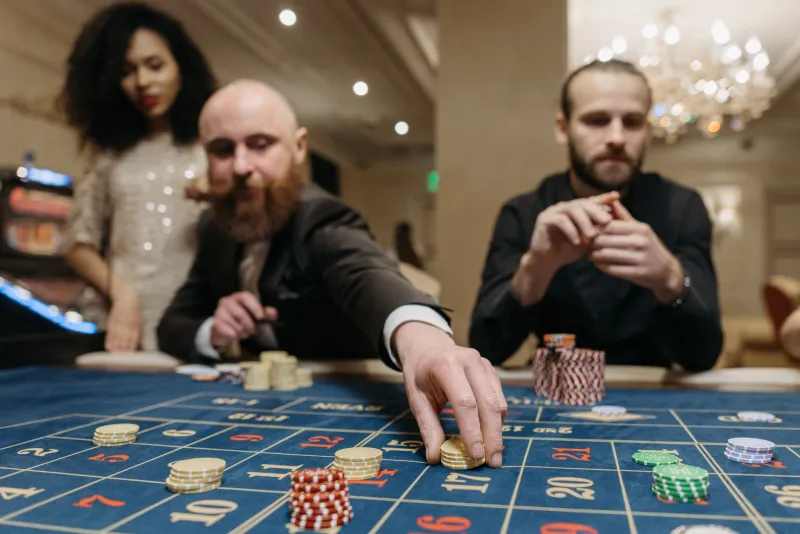
Let's be honest for a second. You've got a ritual. Maybe it's the jersey you wear on game day. Maybe it's the specific seat at the poker table, the time of day you place your first bet, or the fact that you refuse to wager on Tuesdays because something went sideways back in 2019. American bettors are loaded with these quirks — and most of them are quietly draining bank accounts one superstition at a time.
At UFABET2233, we've watched betting behavior across cultures for a long time. And one contrast keeps standing out: the gap between American superstition-driven wagering and the more structured numerological frameworks that Thai bettors rely on. The difference isn't just philosophical. It shows up in the numbers.
Why American Superstitions Feel Real (But Aren't)
Here's the psychology. When you win wearing your lucky cap, your brain logs a connection. When you lose without it, that connection feels confirmed. This is classic confirmation bias — you remember the hits and quietly forget the misses. Psychologists call the underlying mechanism "illusory correlation," and it's one of the most stubborn cognitive traps gamblers fall into.
The problem isn't believing in luck itself. The problem is that arbitrary superstitions — ones with no underlying logic or system — lead to irrational bet sizing, poor timing decisions, and emotional attachment to outcomes. You start chasing losses because "the luck has to turn around." You avoid perfectly solid betting lines because it "doesn't feel right today." Your superstition isn't guiding you toward better bets. It's guiding you away from clear thinking.
Research from behavioral economics consistently shows that gamblers who operate on gut-feel rituals make significantly more impulsive decisions, adjust bet sizes emotionally rather than mathematically, and exhibit lower discipline around session limits. That's not a coincidence — it's the predictable outcome of replacing analysis with feeling.
The Thai Numerological Framework: Structure Over Feeling
Contrast this with how numerology functions within Thai betting culture. This isn't about blindly picking numbers because they "feel lucky." Thai numerological systems — rooted in Buddhist cosmology, astrological cycles, and historical pattern recognition — provide a structured decision-making layer on top of standard wagering analysis.
The key distinction is that Thai numerology operates as a filter, not a replacement for logic. A bettor might use numerological indicators to narrow a field of options, then apply standard probability analysis to make a final call. The superstition, if you want to call it that, is organized. It has rules, patterns, and internal consistency. It's applied the same way every time, which means it can actually be evaluated and refined over time.
American superstitions, by contrast, are almost always personal and inconsistent. Your lucky jersey works until it doesn't, and then you quietly retire it without ever analyzing why. There's no feedback loop. No system. Just vibes.
What the Data Actually Reveals
Studies on recreational betting behavior in the U.S. show that players who self-report as "superstitious" bettors demonstrate measurably worse bankroll management over time. They're more likely to make unplanned bets, increase wager sizes after losses (classic tilt behavior), and exit sessions later than intended. The superstition doesn't just fail to help — it actively creates conditions for worse decision-making.
On the flip side, bettors who follow structured pre-bet routines — regardless of cultural origin — show better session discipline. The routine itself isn't magic. What it does is create a pause between impulse and action. It forces a moment of reflection before money moves. That pause is where rational thinking gets a chance to compete with emotion.
This is why Thai-inspired frameworks, even when they include elements that look like superstition from the outside, can produce better behavioral outcomes. The structure is doing the work, not the mysticism.
How to Replace Your Superstitions With Something That Actually Works
You don't have to adopt someone else's cultural framework wholesale. But you do need to replace arbitrary rituals with structured ones. Here's how to start:
Create a pre-bet checklist. Before any wager, run through three questions: What's my line value? What's my maximum loss on this session? Does this bet fit my stated strategy today? If you can't answer all three clearly, you don't bet.
Audit your superstitions. Write down every ritual or belief you hold about betting luck. Then track outcomes against those beliefs for 30 days. You'll almost certainly find zero correlation — and seeing that in black and white is a powerful way to break the habit.
Replace emotional rituals with analytical ones. Instead of wearing a lucky shirt, make it a habit to review your last five bets before placing a new one. Instead of betting at a "lucky time," identify the times when you historically make your clearest decisions and protect those windows.
Accept variance as the system, not luck. Thai betting culture has a nuanced relationship with chance — acknowledging it as a force to be understood, not controlled through charms. When you stop trying to manipulate luck and start managing probability, your entire relationship with betting shifts.
The Bottom Line
Superstitions feel comforting because uncertainty is uncomfortable. That's human. But in a betting context, comfort is the enemy of profit. Every time your lucky socks override a clear-eyed look at the odds, you're paying a hidden tax on your own psychology.
The Thai approach — structured, systematic, and honest about the role of chance — isn't about being right all the time. It's about making decisions you can actually evaluate, learn from, and improve. That's the real edge. And it's available to any bettor willing to trade their lucky charm for a sharper process.
At UFABET2233, we're here for bettors who want to play smarter, not just luckier.