Hot Hands and Cold Streaks: What Thai Gamblers Understand About Variance That American Bettors Refuse to Accept

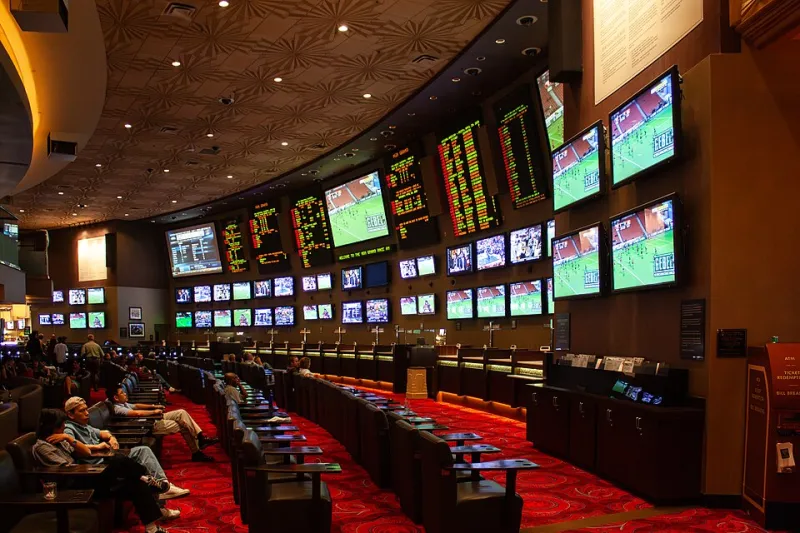
Photo: casino player walking away from table calm expression chips, via urbanmatter.com
There's a scene that plays out in casinos across America every single weekend. A bettor loses three hands in a row, jaw tightening, fingers drumming the felt. Instead of stepping back, they push more chips forward. The logic feels airtight in the moment — surely the tide has to turn — but behavioral economists have a name for that logic: the gambler's fallacy, and it's costing American players billions every year.
Meanwhile, over in Thailand's vibrant betting culture, a different scene tends to unfold. A player hits a rough patch, pauses, and quietly steps away from the table. No frustration spiral. No desperate escalation. Just a calm, almost philosophical acceptance that tonight's variance isn't running their way.
So what's actually going on here? Why do two cultures with a shared love of wagering respond so differently when the cards go cold?
The Science Behind the Chase
Before we get cultural, let's get clinical. Chasing losses is a recognized psychological pattern studied extensively in behavioral research. When people lose money, the brain's threat-response system activates — the same system that kicks in when you're physically in danger. The rational prefrontal cortex starts losing ground to the more reactive limbic system, and suddenly "recouping" feels less like a choice and more like a biological imperative.
Dr. Luke Clark, director of the Centre for Gambling Research at UBC, has published research showing that near-misses and loss sequences actually increase the urge to keep playing rather than triggering a natural stopping point. American casino design, incidentally, leans heavily into this — no clocks, no windows, free drinks, and a relentless audio environment engineered to keep you in the zone.
The result? American bettors frequently enter what researchers call a "loss-chasing loop," where each successive bet isn't a fresh decision but rather an emotionally hijacked attempt to undo what already happened.
Why Thai Betting Culture Approaches This Differently
Thai gambling philosophy — at least in its traditional, culturally embedded form — doesn't treat a losing streak as a problem to be solved. It treats it as information.
There's a concept deeply woven into Thai Buddhist-influenced thinking sometimes described as jai yen, or "cool heart." It's not passivity. It's the deliberate cultivation of emotional steadiness in the face of outcomes you can't control. Applied to betting, this translates into something remarkably practical: if the session isn't going well, that's the session. You don't borrow against the next session to fix it.
Regular players on platforms like UFABET2233, who come from or are influenced by Thai betting traditions, often describe their approach in terms of reading the flow of a game rather than fighting against it. Losing streaks aren't personal. They're variance — a mathematical reality of any probabilistic game — and variance eventually normalizes on its own timeline, not yours.
This isn't mysticism. It's actually pretty solid expected-value thinking dressed in cultural clothing.
The Martingale Trap and Why Americans Keep Falling Into It
One of the most common loss-chasing strategies American bettors default to is the Martingale system — doubling your bet after every loss on the theory that a win will eventually recover everything. On paper, the math seems almost airtight. In practice, it's a fast track to hitting table limits or going broke before that win ever materializes.
The Martingale is essentially the gambler's fallacy formalized into a betting system. It treats past losses as predictors of future wins, when in reality each spin of the roulette wheel, each hand of blackjack, each point spread result is statistically independent of whatever came before it.
Thai bettors, particularly those who've grown up around the cultural norm of accepting outcomes without emotional resistance, tend to be far less attracted to systems that require escalating commitment during a downswing. The psychological cost of watching your bet size balloon while losses continue is something they're culturally conditioned to avoid.
Recognizing the Variance Run Before It Swallows You
Here's the practical takeaway for American bettors who want to borrow a page from this playbook:
Set a session loss limit before you start — and treat it as non-negotiable. This isn't a suggestion you revisit when you're down 40%. It's a rule you establish when your head is clear, specifically because your head won't be clear later.
Separate your current session from your overall record. A bad night doesn't define your strategy. Reacting to a bad night by abandoning your strategy is how one bad night becomes a catastrophic week.
Learn to read emotional escalation as a stop signal, not a starting gun. The moment you feel the urge to "get it back," that's your nervous system telling you that rational decision-making has left the building. Thai betting culture treats that feeling as a cue to walk, not a cue to raise.
Appreciate variance as a feature, not a bug. Without variance, there's no game. The same mathematical reality that puts you on a losing streak is the one that produces winning runs. Fighting variance is like being angry at weather.
The Bigger Picture: Discipline as the Real Edge
The sports betting and casino landscape in America is evolving fast. Legal sports wagering has exploded across dozens of states, and a new generation of bettors is discovering platforms that blend Thai-influenced gaming sensibilities with the convenience of mobile-first technology. UFABET2233 sits squarely at that intersection — bringing a betting culture that values long-term discipline into a market that often rewards the opposite.
The most successful long-term bettors, regardless of cultural background, share one trait: they treat their bankroll like a business asset rather than an emotional outlet. They understand that variance is a river, and you don't fight a river — you learn to navigate it.
American bettors have the analytical tools, the access, and frankly the passion to compete at the highest level. What the Thai approach offers isn't a secret system or a mystical edge. It's something simpler and harder: the ability to sit with a loss, let it be what it is, and come back tomorrow with a clear head.
That's not giving up. That's playing the long game — and in gambling, the long game is the only one that actually pays.